Saturday, June 19, 2010

What is the Difference Between Olive Oil Grades?

What is the Difference Between Olive Oil Grades? How is EVOO made? What do the different grades mean?


The other day, I was trying to figure out what the heck the difference is between extra virgin olive oil and virgin olive oil. Is it a First Press versus a Second Press? Is regular Olive Oil refined and therefore not as good for you? Well, I was wrong on all accounts.

Olive oil produced in Europe has the following classifications applied by the International Olive Council in Europe (IOC) (see Resources below). America has had their own olive oil standards since 1948 that are well below the IOC’s. This has meant that olive oil producers could send us “extra virgin olive oil” that did NOT meet the IOC standards. But that is all going to change in October of 2010, when the US olive oil standards are revised to be in line with the IOC’s standards (see Resources below) .

European Olive Oil Standards (and US Standards as of Oct 2010): 


Virgin means the oil was pressed with no chemical treatments involved.

Extra Virgin Olive Oil (EVOO) - This oil is made by pressing olives to extract the oil - no chemical treatments were

Extra Virgin Olive Oil


involved. It must have less that 0.8% acidity and be judged to have superior taste.   By the way, if you take a sip of your EVOO, you should feel a tingle at the back of your throat (wait a few seconds for it) -- the tingle is from an anti-inflammatory substance called oleocanthal -- the more tingle you feel, the better your EVOO is!

First Pressed - If the Olive oil says “First Pressed” - now-a-days, it just means pressed rather than extracted from other methods. (In the past, extraction was from olives pressed between mats - the first press was a better quality oil, and the second press would yield oil that needed to be refined.)

Virgin Olive Oil (VOO) - This is not the second press! If the olive oil’s acidity is more than EVOO but less than 2%, and has been judged to have a good taste, then it is classified as VOO.

Olive Oil (OO) - this is usually a blend of refined oil and VOO. See “refined oil” below.

Refined Oil - most poorer quality olives need some form of refinement to remove the strong taste and the high acidity. A process using charcoal to filter the oil is used. Temperatures can be high - reaching up to 470° F, however no solvents are used.

Cold Pressed or Cold Expeller Pressed - regular pressing of olives produces friction which can cause very high temperatures. When olives are “Cold Pressed” - the heat is monitored so as not to be greater than 120° F. These oils retain more nutrients. If the heat is not monitored then the oils were just “Expeller Pressed“.

Organic - This will be the healthiest oil yet as there will not be any pesticides or herbicides used in the growing or processing of the oil.

Olive Pomace Oil - solvents (mostly Hexane) are used to extract oil from the remaining product after virgin oil has been pressed, it may be heated, and then refined This oil has only neutral flavor.

Hexane - Hexane is made from petroleum. It can cause dizziness, and with long-term exposure - nerve damage. The problem with these solvent extracted oils is that some of the solvent remains in the oil. It is also more toxic to the environment when used in the manufacturing process because it is released into the air -- the EPA regulates the emissions of hexane as it contributes to smog problems. (See Resources below)

Lampante Oil - this is NOT suitable for human consumption - its name comes from its olden time use in oil-burning lamps.

Country of Origin Labeling 


You should see the country of origin listed on all domestic and imported olive oil. Even OO that has been blended will list the multiple countries of origin on its label. This is because the US has adopted a “country of origin” labeling for all its food on Sept 30, 2008. Also, the IOC ruled that starting in July 2009, all their EVOO and VOO will be labeled stating the of country of origin.  


Shelf Life of Olive Oil 


Olive oil has a shelf life of 12 to 18 months.


generic extra virgin olive oil

Is It Safe to Cook with Extra Virgin Olive Oil?


Smoke Point of Olive Oil


The smoke point of an oil is the point in frying when you can visibly see smoke rising from the pan. This is not desired as it is changes the flavor and decomposition of the oil occurs releasing free radicals. (Free radicals are unstable molecules which destroy other molecules and are responsible for aging and tissue damage.)  


  • EVOO has a smoke point from 365-400°F (see Resources below)


  • OO has a smoke point of around 200°F

 Your stove’s temperatures:  
Low Heat = 300° and lower  
Medium heat = 325-375° F  
High Heat = 400-450° F   

Can Cooking with Olive Oil produce Trans-fatty Acids (Trans fats)?


The short answer is NO - Virgin olive oils are highly monounsaturated oils (55-85% of which is Oleic acid) which do not oxidize as fast as polyunsaturated oils, and remain stable (does not go rancid) at high temperatures and do not easily become hydrogenated (creating Trans fats). However, deep frying will hydrogenate olive oil in miniscule amounts - but you will get more amounts if you re-heat it repeatedly, like they do in commercial operations for making French Fries, etc.

Resources:


  1. International Olive Council (IOC)  

  2. New US Standards for Olive Oil  

  3. Smoke Point of Olive Oil from the Olive Oil Source  

  4. EPA Hexane Rules  

  5. Supermarket Extra Virgin Olive Oils by "Cook's Illustrated"  

Information on Olive Oil‘s Health Benefits:


  1. Health Benefits of Olive Oil, Extra Virgin by "The World's Healthiest Foods"


Sunday, May 16, 2010

How to Watch TV Shows on the Internet

When you’re living on a budget like me, living frugally is just not a option - it’s mandatory!  The more I can cut down on monthly expenses, the better - every penny counts. Unfortunately, my husband and I live in an area where the new broadcast digital television (DTV) is not available over-the-air for us at all (we‘re in a “dark” area).

How do we cope without the television?  Well, we don’t!  Our solution is to watch movies and television shows (or programs) on the internet!

What we do is:


1) We joined Netflix.  They have movies and TV shows available on DVD.   They have many options - 1 movie at a time, 2 movies at a time, up to unlimited movies. We subscribe to the 1 movie at a time option for $9.62 a month (including tax), and we can get an average of 2 movies a week (the first day we receive a movie and watch it, the second day we mail it back, the third day Netflix receives it and mails out the next one). With this option we can also Watch Instantly many TV shows and movies right on the computer - it’s also called Streaming.
(UPDATE: 12/


2) We also watch streaming network and cable television shows on Hulu.  This is one of the legitimate sites that has permission for all the shows that is has available. They do have commercials interruptions, however they are only from 30 seconds to 1 minute long. From them, we get a lot of HD (High Definition) shows in 420p (some even in 720p) and if your bandwidth is slower, they have 320p and even 288p.  They play many first run TV shows the day after they air on broadcast television as well as older shows.

A great feature that Hulu has is that if you search for a show and they don’t have it, but they know who does, they will have a connection available to that website! For instance, I searched for “Nature”, and they show you that PBS has it and you can launch it right from Hulu. Great!


3) We also watch Fancast - they have many shows available as well. Also, we can watch  Joost  for music videos.


4) The above websites offer TV shows and movies in all the different genres. There are other legitimate places to watch TV shows as well. But beware, watching TV shows on places that are not legitimate, as well as being illegal, may open your computer up to receive viruses.


5) We monitor our local weather on Wunderground   - it’s great for the local radar and local temperatures. We also compare it to The Weather Channel - we watch their current video updates on hurricanes during hurricane season too!


6)We catch the national news headlines on BBC  and CNN.  We can also check our local TV Channels on the web for local news.


We also wanted to watch these streaming TV shows and movies on our TV in the living room - it‘s so much more comfortable in there - so we connected our computer to our TV. ("How to" article coming soon)


If anyone knows of additional legit websites to watch TV shows on, please share that information with me.


Thanks and Enjoy!

Saturday, May 8, 2010

How to be Frugal When Buying Organic Fruits and Vegetables

apples


I have found that organic produce is usually more expensive than conventionally grown non-organic produce - hopefully, that may change in the future if more people demand more organically grown fruits and vegetables. For us, being on a budget and all, it’s hard to be frugal and purchase all our produce organic. Fortunately for us, the Environmental Working Group (EWG) comes out with a listing every year called "The Dirty Dozen" (see list at end of page). This list contains the top 12 fruits and vegetables containing the most pesticides when conventionally grown. So, the best healthy approach for us: Only buy organic fruits/vegetables if they are on "The Dirty Dozen" list AND if we eat a LOT of them REGULARLY.     

organic lettuce, carrots and celery


For example, we eat a lot of salads, and I snack on celery and carrots - so we buy ORGANIC celery,lettuce and carrots (they are #4, #9 and #11 on the EWG Dirty Dozen list). We purchase non-organic onion, broccoli and tomatoes.     

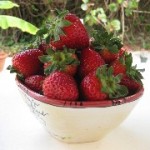
organic strawberries


fruit smoothie drink


We have a morning fruit drink that has bananas, papayas, pineapple and strawberries - so we buy ORGANIC strawberries (#6 on the EWG Dirty Dozen list), and the rest as non-organic as these fruits have less pesticides in them. We occasionally eat peaches, pears, apples, nectarines, cherries, kale, and grapes - so, because we don’t eat them regularly or eat tons of them, we buy these as non-organic produce.     

peaches
This way we are reducing
the total amount of
pesticides that we ingest, and being frugal at the same time.     

Below are the 2010 lists from the Environmental Working Group (EWG):     

“The Dirty Dozen” - the most contaminated fruits and vegetables, and “The Clean 15“ - the least contaminated fruits and vegetables.
(See EWG Foodnews for a handy printable guide that you can bring to the store with you, or an application that you can download to your cellphone.)     


Update 8/13/2010: The EWG has updated their Dirty Dozen List and their Clean 15 List for 2010!  The new lists are reflected below.  (Oh no! Blueberries are on the Dirty Dozen List - my refrigerator is full of frozen blueberries - it may take a while to eat through them!)  You may also want to see the EWG full listing of 49 fruits and vegetables.    

The 2010 "The Dirty Dozen" -- the top 12 fruits and vegetables with the most pesticides when conventionally grown (From Worst to best):        

  1. Peach Celery

  2. Apple Peaches

  3. Bell Pepper Strawberries

  4. Celery Apples

  5. Nectarine Blueberries

  6. Strawberries Nectarines

  7. Cherries Bell Pepper

  8. Kale Spinach

  9. Lettuce Cherries

  10. Grapes (Imported) Kale/Collard Greens

  11. Carrot Potatoes

  12. Pear Grapes (Imported)


"The Clean 15" - the top 15 fruits and vegetables containing the least amount of pesticides when conventionally grown (from Best to worse):     

  1. Onion

  2. Avocado

  3. Sweet Corn

  4. Pineapple

  5. Mango

  6. Asparagus Sweet Peas

  7. Sweet Peas Asparagus

  8. Kiwi

  9. Cabbage

  10. Eggplant

  11. Papaya Cantalope

  12. Watermelon

  13. Broccoli Grapefruit

  14. Tomato Sweet Potato

  15. Sweet Potato Honeydew Melon

Tuesday, May 4, 2010

What is Homeopathy - A Simple Explanation

Homeopathy is a system of medicine that stimulates the body and mind to heal itself. It is legal in the United States and remedies are controlled by the FDA.

Homeopathic Remedies are made from plants, minerals and animal substances. Remedies are tested by a series of provings - the effects and symptoms of the substances on healthy and sick people are recorded and added to the Remedy’s symptom list. Homeopathy then matches the persons symptoms with the remedy’s symptoms list and chooses a remedy with the closest match possible.

These symptom lists are compiled into 2 different books or sections of a book - a "Materia Medica" which is in order by remedy with each symptom listed, and a "Repertory" which is in order by symptom with all remedies listed.


Wednesday, April 28, 2010

How to Make Your Own Foaming Hand Soap


foaming hand soap


Here is a simple way to make your own hand soap and save money, too. (It's a very frugal thing to do.) In a nutshell, all you have to do is just add water to regular liquid hand soap. This works because foaming hand soap is essentially a very watered down liquid soap.

You will need:

    Saturday, April 17, 2010

    How to Control Cat or Dog Flea Allergy Dermatitis

    Sparky - my cat


    Most cats and dogs in the US are troubled with fleas. Normally when thy bite them, they make them scratch and itch. Very annoying to the animal and to their human caretakers! Today, there are a plethora of products available that will kill and repel fleas to relieve your pet (and you too).

    However, when your pet has flea allergy dermatitis, just one bite by a flea can drive them crazy - they will itch and scratch or chew and lick the spot unit it is RAW. They may even scratch or lick another spot where they can reach that hasn’t been bit. This is what happens to my cat “Sparky”. She gets bit by a flea and will lick off all the fur on her stomach, until she is raw.

    I’ve tried a few different flea products - some conventional and some “natural” - before I stumbled on this combination of products that get her flea allergy under control.  For her, this method really works like a charm.

    Thursday, April 8, 2010

    Cookware Varieties and Safety Issues

    When it comes to cooking, who ever thought that there would be so many decisions to make on what type of cookware to use!  There are many varieties available to choose from.   There are different sizes and shapes, different non-stick capabilities, some have better heat distribution than others, and other characteristics as well.  But, did you know that many pans can leach potentially dangerous contaminants into our food?   So safety is something that we should be aware of when choosing cookware.   In this article, I've listed some of the things that you should keep in mind before purchasing new pans.      

    Here are the choices available:    

    1) Teflon coated pans :  These pans are coated with a non-stick "Teflon" coating.