Showing posts with label Organic Foods. Show all posts

Wednesday, May 2, 2012

Everglades Tomatoes - They Grow Very Well in South Florida

Everglades Tomato Plant

This year I tried the Everglades Tomato plants and are they "ever" growing!!! They are a small grape tomato variety, and although they are small, they have plenty of taste.

I purchased some seeds online from Master Gardener Landscaping of Fort Lauderdale. So, I had to grow them from seed.  It was amazing, each and every seed that I planted took hold and grew.  I re-potted the small plants into pots that had an "organic top soil and cow manure" mix, and that seemed to work very well for me.

Of course our growing season may be almost over because we live in southern Florida and it gets really hot in the summer - probably too hot for tomatoes. Our normal growing season is usually from late October until May (seems crazy to me as I am originally from New England). However, I will try to get the plants to live through the summer - we'll see what happens.  I've read that the Everglades tomato can be grown anywhere in the country - so anyone can give them a try.
Everglades Tomato
Everglades Tomato and a penny


Monday, April 25, 2011

Why is Himalayan salt good for you?

Disclaimer: I do not provide medical advise or otherwise engage in the practice of medicine. The statements on this website have not been evaluated by the FDA. Consult your doctor before following anything you have read on this website. See my full medical disclaimer under Terms of Use.


Salt can be a problem for people with high blood pressure (or hypertension).  My husband has borderline high-blood pressure and has been advised by his doctor to NOT use salt. As for me, since I was a little girl, my family never used salt - I'm not sure why, but they never used ANY spices at all (that's a whole other story). So, we both normally don't add any extra salt to our food at the kitchen table. We DO add some to certain foods when we are preparing them - like bread and chicken soup.
So now, I just found out about  Himalayan crystal salt. It is supposed to be healthier for you than normal refined table salt.   People involved in natural health products say that  it has many trace minerals and elements that your body needs and is very easily assimilated.  Oh yeah, and it's PINK (due to containing iron and other minerals)!
Himalayan Sea Salt

Do We Really Need Salt?


Wednesday, March 16, 2011

Why is Coconut Oil Good For You and Its Uses

open coconut
Coconut oil is good for you.  It is more easily digested by the body than other vegetable oils.  It has good fatty acids and vitamins, like Vitamin E, Choline and Vitamin K (which is good for healthy bones and is a vitamin needed to make your blood clot - a good thing).

Why is Coconut oil good for you?


Coconut oil has medium chain fatty acids (MCFA’s).  These fatty acids are more water soluble and more easily digested by the body than the long chain fatty acids (LCFA’s) found in other vegetable oils.  This is because they don‘t require bile to break them down, enter the bloodstream quicker and go to the liver faster where they are used as an immediate source of energy.  Also, less MCFA’s are converted into fat than LCFA’s.


What is a Medium Chain Fatty Acid and a Medium Chain Triglyceride?
Fats in food are composed of fat molecules called fatty acids, which are grouped in a structure call a triglyceride which has 3 fatty acids linked with a glycerol carbon atom.

Triglycerides and fatty acids are both classified as saturated, monounsaturated or polyunsaturated. Plus they have a further classification on whether the fatty acid chain of carbon atoms are short, medium or long.

So there are short chain fatty acids (SCFA) and short chain triglycerides (SCT), medium chain fatty acids (MCFA) and medium chain triglycerides (MCT), and long chain fatty acids (LCFA) and long chain triglycerides (LCT).


Wednesday, February 16, 2011

Recipe for Coconut Rum Ball Cookies

Coconut rum ball cookies

This recipe is very simple to do, especially if you have access to fresh coconuts.
The cookies have a nice chewy texture and a nice coconut flavor!

You will need:

coconut rum ball cookie dough
3/4  Cup Organic Virgin Coconut Oil

1 3/4 cup all-purpose flour

1/4 cup sugar

1/4 cup Coconut Rum*

1 3/4  shredded coconut - unsweetened (fresh is preferable)


Friday, November 12, 2010

How to Buy Organic Eggs from Humanely Treated Chickens

eggs


Lets face it, factory farm “battery cagedegg-laying chickens are not humanely treated. They are kept in small cages their entire life - about the size of a 8 1/2 by 11 sheet of paper. They have their beaks clipped so that they do not peck at themselves or each other in close confinement. They can be deliberately starved to increase egg production which is called forced molting. They are denied their natural behaviors, like spreading their wings, the act of nesting, the act of perching and taking natural dust baths. Cage confinement increases the risk of salmonella.

Endorsing this practice impacts our humanitarianism - our respect for other life forms.
I personally do not want to eat meat or eggs from animals that were mistreated.


For more information, see the Humane Society website articles: Egg RecallCage Confinement of Laying Hens Increases Salmonella Risk.

For great visual information visit the Animal Visuals website for these articles- Battery Cages Increase Salmonella Risk and Harm Chickens, and The Virtual Battery Cage

How to find Eggs from “Happy” Chickens that were treated humanely?


Saturday, June 19, 2010

What is the Difference Between Olive Oil Grades?

What is the Difference Between Olive Oil Grades? How is EVOO made? What do the different grades mean?


The other day, I was trying to figure out what the heck the difference is between extra virgin olive oil and virgin olive oil. Is it a First Press versus a Second Press? Is regular Olive Oil refined and therefore not as good for you? Well, I was wrong on all accounts.

Olive oil produced in Europe has the following classifications applied by the International Olive Council in Europe (IOC) (see Resources below). America has had their own olive oil standards since 1948 that are well below the IOC’s. This has meant that olive oil producers could send us “extra virgin olive oil” that did NOT meet the IOC standards. But that is all going to change in October of 2010, when the US olive oil standards are revised to be in line with the IOC’s standards (see Resources below) .

European Olive Oil Standards (and US Standards as of Oct 2010): 


Virgin means the oil was pressed with no chemical treatments involved.

Extra Virgin Olive Oil (EVOO) - This oil is made by pressing olives to extract the oil - no chemical treatments were

Extra Virgin Olive Oil


involved. It must have less that 0.8% acidity and be judged to have superior taste.   By the way, if you take a sip of your EVOO, you should feel a tingle at the back of your throat (wait a few seconds for it) -- the tingle is from an anti-inflammatory substance called oleocanthal -- the more tingle you feel, the better your EVOO is!

First Pressed - If the Olive oil says “First Pressed” - now-a-days, it just means pressed rather than extracted from other methods. (In the past, extraction was from olives pressed between mats - the first press was a better quality oil, and the second press would yield oil that needed to be refined.)

Virgin Olive Oil (VOO) - This is not the second press! If the olive oil’s acidity is more than EVOO but less than 2%, and has been judged to have a good taste, then it is classified as VOO.

Olive Oil (OO) - this is usually a blend of refined oil and VOO. See “refined oil” below.

Refined Oil - most poorer quality olives need some form of refinement to remove the strong taste and the high acidity. A process using charcoal to filter the oil is used. Temperatures can be high - reaching up to 470° F, however no solvents are used.

Cold Pressed or Cold Expeller Pressed - regular pressing of olives produces friction which can cause very high temperatures. When olives are “Cold Pressed” - the heat is monitored so as not to be greater than 120° F. These oils retain more nutrients. If the heat is not monitored then the oils were just “Expeller Pressed“.

Organic - This will be the healthiest oil yet as there will not be any pesticides or herbicides used in the growing or processing of the oil.

Olive Pomace Oil - solvents (mostly Hexane) are used to extract oil from the remaining product after virgin oil has been pressed, it may be heated, and then refined This oil has only neutral flavor.

Hexane - Hexane is made from petroleum. It can cause dizziness, and with long-term exposure - nerve damage. The problem with these solvent extracted oils is that some of the solvent remains in the oil. It is also more toxic to the environment when used in the manufacturing process because it is released into the air -- the EPA regulates the emissions of hexane as it contributes to smog problems. (See Resources below)

Lampante Oil - this is NOT suitable for human consumption - its name comes from its olden time use in oil-burning lamps.

Country of Origin Labeling 


You should see the country of origin listed on all domestic and imported olive oil. Even OO that has been blended will list the multiple countries of origin on its label. This is because the US has adopted a “country of origin” labeling for all its food on Sept 30, 2008. Also, the IOC ruled that starting in July 2009, all their EVOO and VOO will be labeled stating the of country of origin.  


Shelf Life of Olive Oil 


Olive oil has a shelf life of 12 to 18 months.


generic extra virgin olive oil

Is It Safe to Cook with Extra Virgin Olive Oil?


Smoke Point of Olive Oil


The smoke point of an oil is the point in frying when you can visibly see smoke rising from the pan. This is not desired as it is changes the flavor and decomposition of the oil occurs releasing free radicals. (Free radicals are unstable molecules which destroy other molecules and are responsible for aging and tissue damage.)  


  • EVOO has a smoke point from 365-400°F (see Resources below)


  • OO has a smoke point of around 200°F

 Your stove’s temperatures:  
Low Heat = 300° and lower  
Medium heat = 325-375° F  
High Heat = 400-450° F   

Can Cooking with Olive Oil produce Trans-fatty Acids (Trans fats)?


The short answer is NO - Virgin olive oils are highly monounsaturated oils (55-85% of which is Oleic acid) which do not oxidize as fast as polyunsaturated oils, and remain stable (does not go rancid) at high temperatures and do not easily become hydrogenated (creating Trans fats). However, deep frying will hydrogenate olive oil in miniscule amounts - but you will get more amounts if you re-heat it repeatedly, like they do in commercial operations for making French Fries, etc.

Resources:


  1. International Olive Council (IOC)  

  2. New US Standards for Olive Oil  

  3. Smoke Point of Olive Oil from the Olive Oil Source  

  4. EPA Hexane Rules  

  5. Supermarket Extra Virgin Olive Oils by "Cook's Illustrated"  

Information on Olive Oil‘s Health Benefits:


  1. Health Benefits of Olive Oil, Extra Virgin by "The World's Healthiest Foods"


Saturday, May 8, 2010

How to be Frugal When Buying Organic Fruits and Vegetables

apples


I have found that organic produce is usually more expensive than conventionally grown non-organic produce - hopefully, that may change in the future if more people demand more organically grown fruits and vegetables. For us, being on a budget and all, it’s hard to be frugal and purchase all our produce organic. Fortunately for us, the Environmental Working Group (EWG) comes out with a listing every year called "The Dirty Dozen" (see list at end of page). This list contains the top 12 fruits and vegetables containing the most pesticides when conventionally grown. So, the best healthy approach for us: Only buy organic fruits/vegetables if they are on "The Dirty Dozen" list AND if we eat a LOT of them REGULARLY.     

organic lettuce, carrots and celery


For example, we eat a lot of salads, and I snack on celery and carrots - so we buy ORGANIC celery,lettuce and carrots (they are #4, #9 and #11 on the EWG Dirty Dozen list). We purchase non-organic onion, broccoli and tomatoes.     

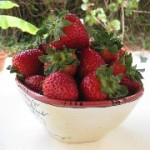
organic strawberries


fruit smoothie drink


We have a morning fruit drink that has bananas, papayas, pineapple and strawberries - so we buy ORGANIC strawberries (#6 on the EWG Dirty Dozen list), and the rest as non-organic as these fruits have less pesticides in them. We occasionally eat peaches, pears, apples, nectarines, cherries, kale, and grapes - so, because we don’t eat them regularly or eat tons of them, we buy these as non-organic produce.     

peaches
This way we are reducing
the total amount of
pesticides that we ingest, and being frugal at the same time.     

Below are the 2010 lists from the Environmental Working Group (EWG):     

The Dirty Dozen” - the most contaminated fruits and vegetables, and “The Clean 15“ - the least contaminated fruits and vegetables.
(See EWG Foodnews for a handy printable guide that you can bring to the store with you, or an application that you can download to your cellphone.)     


Update 8/13/2010: The EWG has updated their Dirty Dozen List and their Clean 15 List for 2010!  The new lists are reflected below.  (Oh no! Blueberries are on the Dirty Dozen List - my refrigerator is full of frozen blueberries - it may take a while to eat through them!)  You may also want to see the EWG full listing of 49 fruits and vegetables.    

The 2010 "The Dirty Dozen" -- the top 12 fruits and vegetables with the most pesticides when conventionally grown (From Worst to best):        

  1. Peach Celery

  2. Apple Peaches

  3. Bell Pepper Strawberries

  4. Celery Apples

  5. Nectarine Blueberries

  6. Strawberries Nectarines

  7. Cherries Bell Pepper

  8. Kale Spinach

  9. Lettuce Cherries

  10. Grapes (Imported) Kale/Collard Greens

  11. Carrot Potatoes

  12. Pear Grapes (Imported)


"The Clean 15" - the top 15 fruits and vegetables containing the least amount of pesticides when conventionally grown (from Best to worse):     

  1. Onion

  2. Avocado

  3. Sweet Corn

  4. Pineapple

  5. Mango

  6. Asparagus Sweet Peas

  7. Sweet Peas Asparagus

  8. Kiwi

  9. Cabbage

  10. Eggplant

  11. Papaya Cantalope

  12. Watermelon

  13. Broccoli Grapefruit

  14. Tomato Sweet Potato

  15. Sweet Potato Honeydew Melon