Showing posts with label organic. Show all posts

Wednesday, March 16, 2011

Why is Coconut Oil Good For You and Its Uses

open coconut
Coconut oil is good for you.  It is more easily digested by the body than other vegetable oils.  It has good fatty acids and vitamins, like Vitamin E, Choline and Vitamin K (which is good for healthy bones and is a vitamin needed to make your blood clot - a good thing).

Why is Coconut oil good for you?


Coconut oil has medium chain fatty acids (MCFA’s).  These fatty acids are more water soluble and more easily digested by the body than the long chain fatty acids (LCFA’s) found in other vegetable oils.  This is because they don‘t require bile to break them down, enter the bloodstream quicker and go to the liver faster where they are used as an immediate source of energy.  Also, less MCFA’s are converted into fat than LCFA’s.


What is a Medium Chain Fatty Acid and a Medium Chain Triglyceride?
Fats in food are composed of fat molecules called fatty acids, which are grouped in a structure call a triglyceride which has 3 fatty acids linked with a glycerol carbon atom.

Triglycerides and fatty acids are both classified as saturated, monounsaturated or polyunsaturated. Plus they have a further classification on whether the fatty acid chain of carbon atoms are short, medium or long.

So there are short chain fatty acids (SCFA) and short chain triglycerides (SCT), medium chain fatty acids (MCFA) and medium chain triglycerides (MCT), and long chain fatty acids (LCFA) and long chain triglycerides (LCT).


Monday, February 28, 2011

How to Use Coconut Oil as a Body Cream


open coconut

I love Virgin or Extra Virgin Coconut Oil. I mainly use if for my body cream.

It has to be virgin or extra virgin coconut oil to retain its smell and taste.  I also like to use organic oil so it is free of chemicals and pesticides.

Benefits

    Monday, February 21, 2011

    Easy Coconut Lip Balm Recipe

    This coconut lip balm helps keep your lips smooth and soft.   It is very easy to make too!


    • I only use Organic Virgin Coconut Oil because organic is free of chemicals and pesticides.

    • You must use virgin coconut oil as this is the only type of coconut oil that has a coconut flavor.

    You will like it if you like your lip balm to be a little bit glossy and have a natural coconut flavor.

    coconut


    You will need:

    Friday, November 12, 2010

    How to Buy Organic Eggs from Humanely Treated Chickens

    eggs


    Lets face it, factory farm “battery cagedegg-laying chickens are not humanely treated. They are kept in small cages their entire life - about the size of a 8 1/2 by 11 sheet of paper. They have their beaks clipped so that they do not peck at themselves or each other in close confinement. They can be deliberately starved to increase egg production which is called forced molting. They are denied their natural behaviors, like spreading their wings, the act of nesting, the act of perching and taking natural dust baths. Cage confinement increases the risk of salmonella.

    Endorsing this practice impacts our humanitarianism - our respect for other life forms.
    I personally do not want to eat meat or eggs from animals that were mistreated.


    For more information, see the Humane Society website articles: Egg RecallCage Confinement of Laying Hens Increases Salmonella Risk.

    For great visual information visit the Animal Visuals website for these articles- Battery Cages Increase Salmonella Risk and Harm Chickens, and The Virtual Battery Cage

    How to find Eggs from “Happy” Chickens that were treated humanely?


    Saturday, May 8, 2010

    How to be Frugal When Buying Organic Fruits and Vegetables

    apples


    I have found that organic produce is usually more expensive than conventionally grown non-organic produce - hopefully, that may change in the future if more people demand more organically grown fruits and vegetables. For us, being on a budget and all, it’s hard to be frugal and purchase all our produce organic. Fortunately for us, the Environmental Working Group (EWG) comes out with a listing every year called "The Dirty Dozen" (see list at end of page). This list contains the top 12 fruits and vegetables containing the most pesticides when conventionally grown. So, the best healthy approach for us: Only buy organic fruits/vegetables if they are on "The Dirty Dozen" list AND if we eat a LOT of them REGULARLY.     

    organic lettuce, carrots and celery


    For example, we eat a lot of salads, and I snack on celery and carrots - so we buy ORGANIC celery,lettuce and carrots (they are #4, #9 and #11 on the EWG Dirty Dozen list). We purchase non-organic onion, broccoli and tomatoes.     

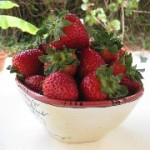
    organic strawberries


    fruit smoothie drink


    We have a morning fruit drink that has bananas, papayas, pineapple and strawberries - so we buy ORGANIC strawberries (#6 on the EWG Dirty Dozen list), and the rest as non-organic as these fruits have less pesticides in them. We occasionally eat peaches, pears, apples, nectarines, cherries, kale, and grapes - so, because we don’t eat them regularly or eat tons of them, we buy these as non-organic produce.     

    peaches
    This way we are reducing
    the total amount of
    pesticides that we ingest, and being frugal at the same time.     

    Below are the 2010 lists from the Environmental Working Group (EWG):     

    The Dirty Dozen” - the most contaminated fruits and vegetables, and “The Clean 15“ - the least contaminated fruits and vegetables.
    (See EWG Foodnews for a handy printable guide that you can bring to the store with you, or an application that you can download to your cellphone.)     


    Update 8/13/2010: The EWG has updated their Dirty Dozen List and their Clean 15 List for 2010!  The new lists are reflected below.  (Oh no! Blueberries are on the Dirty Dozen List - my refrigerator is full of frozen blueberries - it may take a while to eat through them!)  You may also want to see the EWG full listing of 49 fruits and vegetables.    

    The 2010 "The Dirty Dozen" -- the top 12 fruits and vegetables with the most pesticides when conventionally grown (From Worst to best):        

    1. Peach Celery

    2. Apple Peaches

    3. Bell Pepper Strawberries

    4. Celery Apples

    5. Nectarine Blueberries

    6. Strawberries Nectarines

    7. Cherries Bell Pepper

    8. Kale Spinach

    9. Lettuce Cherries

    10. Grapes (Imported) Kale/Collard Greens

    11. Carrot Potatoes

    12. Pear Grapes (Imported)


    "The Clean 15" - the top 15 fruits and vegetables containing the least amount of pesticides when conventionally grown (from Best to worse):     

    1. Onion

    2. Avocado

    3. Sweet Corn

    4. Pineapple

    5. Mango

    6. Asparagus Sweet Peas

    7. Sweet Peas Asparagus

    8. Kiwi

    9. Cabbage

    10. Eggplant

    11. Papaya Cantalope

    12. Watermelon

    13. Broccoli Grapefruit

    14. Tomato Sweet Potato

    15. Sweet Potato Honeydew Melon